Most SaaS landing pages in 2026 look similar because there is a near-universal formula that works. The catch is that most founders implement 80% of the formula and lose 50% of potential conversion to the 20% they skipped.
This is the founder's guide to what actually works on a SaaS landing page in 2026. We run BetterLaunch.co, a launch platform for indie founders, so we look at a lot of SaaS landing pages. No theory, no "10 best practices," just the structural anatomy that moves signups.
#TL;DR
- The winning SaaS landing page structure in 2026 is: hero + value prop + social proof + features (problem/solution blocks) + more social proof + pricing + FAQ + final CTA. Every piece earns its place.
- Your hero headline should pass the "5-second test": a stranger on a plane should understand what the product does and why they would want it.
- Social proof scattered throughout the page outperforms social proof stacked in one spot.
- The biggest conversion killer on indie SaaS pages is vague value props. Specific > clever.
- Expected conversion benchmarks: 3 to 8% visitor-to-signup is healthy; 10%+ is exceptional.
- [BetterLaunch](https://betterlaunch.co/submit) — list your SaaS to get traffic to test your landing page on.
#Why landing page design moves more than design sense
Landing page changes often produce 2 to 5x swings in signup conversion. Common wins from our observation of indie SaaS optimization:
- Replacing vague hero headlines with specific ones: +30 to 80% conversion.
- Adding social proof above the fold: +15 to 40%.
- Tightening value prop copy: +10 to 30%.
- Removing friction in the signup form: +20 to 50%.
These are not marginal tweaks. This is why landing pages are where to spend attention first, before paid ads.
#The 8-section anatomy of a high-converting SaaS landing page
A reliable structure from top to bottom:
- Hero section (headline, sub-head, hero visual, primary CTA, small trust signal).
- Value prop block (one-sentence positioning, 3 key benefits).
- Logo bar / social proof ("trusted by", customer logos or count).
- Feature blocks (3 to 5 problem/solution pairs with visuals).
- Social proof section (testimonials, case studies, numbers).
- Pricing section (3-tier preview with link to pricing page).
- FAQ (5 to 8 common objections answered).
- Final CTA block (restate value prop, strong CTA, small trust signal).
Skip any of these and you lose conversion. The 8 blocks are not decoration; each one addresses a specific buyer objection.
#Section 1: The hero (the single most important section)
80% of landing page attention goes to the hero. 80% of landing pages lose visitors at the hero.
#The hero formula that works
Headline: what the product does, for whom, and why it matters. Under 10 words.
Sub-headline: one-sentence expansion. What the outcome looks like. Under 20 words.
Hero visual: a clear product screenshot, GIF, or 30-second autoplay (muted) video. Not a stock photo.
Primary CTA: one button, specific label ("Start free trial," "Try it free," "See how it works"). Never just "Learn more."
Trust signal: one small line like "Trusted by 3,000+ founders" or "4.8/5 on G2" directly below the CTA.
#Hero examples that work
- Linear: "Linear is a purpose-built tool for modern product development."
- Stripe: "Financial infrastructure for the internet."
- Notion: "The AI workspace that works for you."
Short, specific, positions the product for a clear buyer. If you cannot fit your product into this structure, you need to narrow your positioning before redesigning your page.
#Common hero mistakes
- Vague headlines ("The future of work"). Means nothing.
- Jargon-heavy headlines ("AI-powered synergy platform"). Repels buyers.
- Too many CTAs (3+ buttons in the hero). Decision paralysis; conversion drops.
- Stock photography as hero visual. Immediate credibility damage.
- No product visible in the hero. Buyers need to see what they are buying.
#Section 2: The value prop block
Directly below the hero, a one-paragraph expansion of the positioning followed by 3 "benefit" cards.
Each benefit card should:
- Have a 3-to-5-word heading (the outcome, not the feature).
- One-sentence description.
- An icon or small visual.
Example structure:
- Ship 3x faster — Instead of managing 10 tools, use Linear to plan, track, and ship.
- See everything at a glance — Dashboards, roadmaps, cycles, backlogs in one view.
- Built for speed — Keyboard-first, instant everywhere, no loading spinners.
Benefits answer "why do I want this?" before features answer "what does it do?"
#Section 3: Social proof (first pass)
Immediately after the value prop, a logo bar or trust signal block.
Options, in order of credibility:
- Real customer logos (5 to 8 visible, from recognizable brands ideally).
- User count ("Used by 10,000+ teams").
- Awards or badges ("#1 on Product Hunt," "Featured in TechCrunch").
- Review platform badges (G2 high performer, Capterra rating).
Early-stage indie SaaS often lacks recognizable logos. Acceptable alternatives:
- User testimonial above the fold (with name, company, photo, role).
- Specific customer count ("Trusted by 372 indie founders") rather than generic "Trusted by many."
- Launch platform badges ("#3 on Product Hunt," "Featured on BetterLaunch").
#Section 4: Feature blocks (problem/solution pattern)
Not a feature list. 3 to 5 "problem/solution" blocks where each block:
- Identifies a real pain your user has.
- Shows how your product solves it.
- Includes a visual (screenshot, GIF, short video).
Example structure per block:
- Problem heading: "Stop losing features in a spreadsheet backlog."
- Solution sentence: "Linear turns your roadmap into an interactive board that updates automatically."
- Visual: 15-second GIF of the feature in action.
- Small CTA: "See the roadmap →" linking to deeper content or signup.
Pattern: alternating left-aligned / right-aligned blocks keeps visual rhythm.
Common mistake: listing 15 features with equal weight. Pick 3 to 5 that map to your user's biggest problems and hit those hard.
#Section 5: Social proof (second pass, testimonials)
A dedicated testimonial section with 3 to 6 customer quotes.
Each testimonial needs:
- A real person's name (not "John D.").
- Their role and company.
- A photo.
- A specific quote (not "great product!" but "saved 10 hours per week").
Bonus elements:
- Video testimonials (if you can get them) out-perform text 2 to 5x.
- Case studies linked from the testimonial for high-intent readers.
- Metrics in the quote ("grew MRR 40% in 3 months").
Avoid fake or generic testimonials. Buyers detect them. Zero testimonials is better than fake ones.
#Section 6: Pricing preview
Either embed your full pricing table on the landing page or show a preview with "See all plans →" link to the full pricing page.
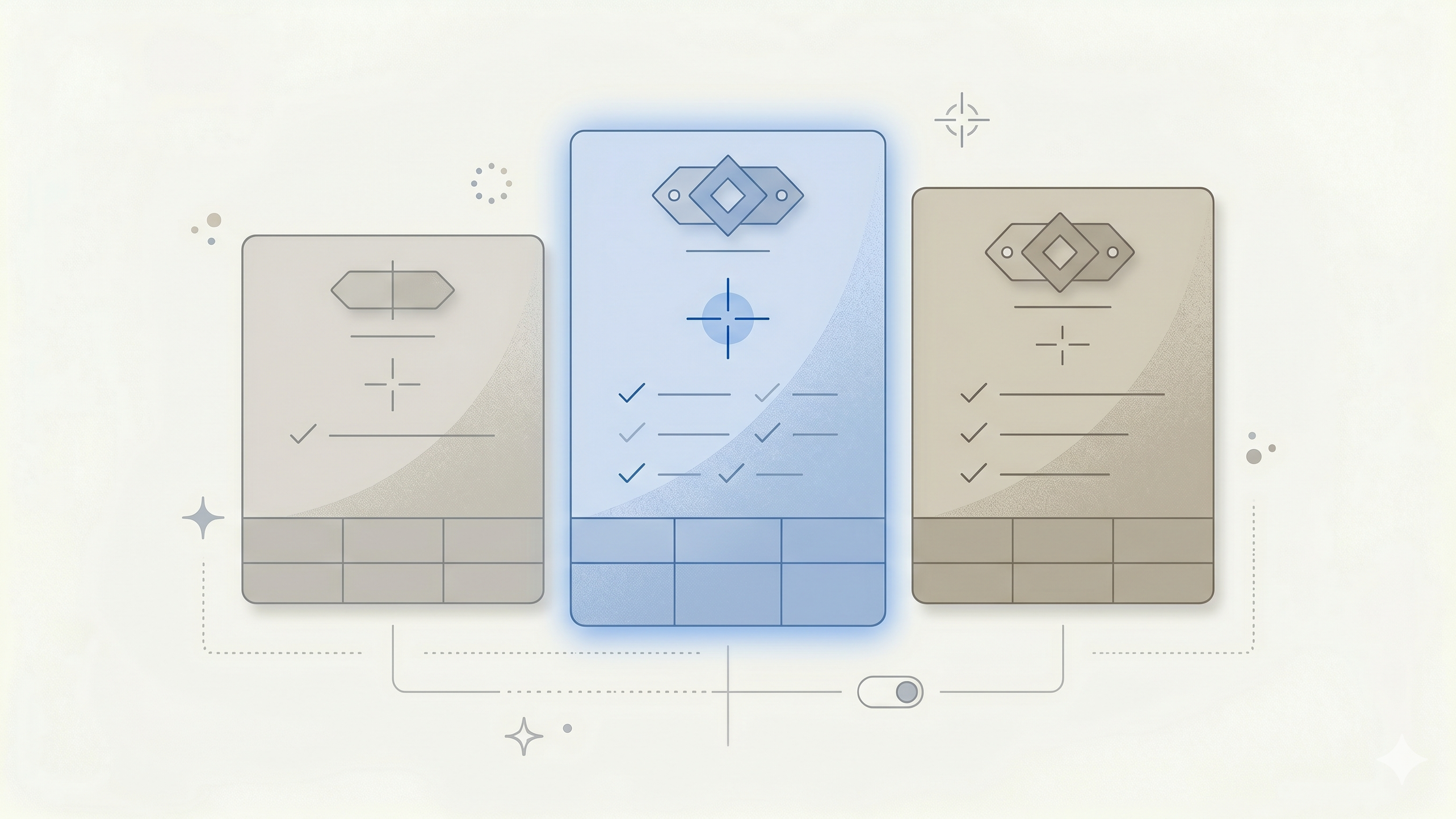
Best practice: show at least 3 tiers above the fold of the pricing section, with the middle tier visually prominent ("Most Popular" tag).
Include:
- Monthly / annual toggle.
- Clear per-tier feature list.
- One CTA per tier.
- Trust signal near the CTA ("30-day money-back guarantee," "Cancel anytime").
For the full pricing page template, see SaaS Pricing Strategy 2026 and Pricing Page Examples: 20 of the Best Decoded.
#Section 7: FAQ
5 to 8 questions that address the biggest objections. Common patterns:
- "How long does setup take?"
- "Can I cancel anytime?"
- "Is my data secure?"
- "Do you offer discounts for startups / non-profits / teams?"
- "How does it compare to [competitor]?"
- "Can I import from [other tool]?"
- "What integrations do you support?"
- "Do you have a free trial?"
The FAQ is your chance to remove final-step hesitation. Skip it and you lose 10 to 20% of the ready-to-sign-up traffic.
#Section 8: Final CTA block
Before the footer, a strong closing block that restates the value prop and asks for the action.
Structure:
- Headline (restates the core benefit).
- Sub-headline (adds final urgency or reassurance).
- Primary CTA (same as hero, identical label).
- One more trust signal.
Example:
- "Ship faster. Starting today."
- "Free for up to 10 users. No credit card required."
- [Start for free]
- "Join 3,000+ teams building with Linear."
#Conversion benchmarks for SaaS landing pages
Realistic benchmarks for indie SaaS in 2026 (visitor to free signup):
- Under 2%: structural problem; review the hero.
- 2 to 5%: normal range; room to optimize.
- 5 to 8%: healthy.
- 8 to 12%: excellent.
- 12%+: either exceptional or a measurement bug.
Visitor to paid signup (without free tier):
- 0.5 to 2%: typical.
- 2 to 5%: good.
- 5%+: excellent, usually with strong WOM.
Focus optimization on the hero first; it delivers the biggest swings.
#The 10 conversion-killers we see most often
- Vague hero headline.
- Stock photography as hero visual.
- No product visible above the fold.
- Three or more competing CTAs in the hero.
- Feature list instead of problem/solution blocks.
- No social proof above the fold.
- Generic testimonials ("great product!").
- Pricing hidden behind "Contact sales" at indie scale.
- Long, jargon-heavy copy.
- No FAQ.
Fix these ten in order, and most indie SaaS landing pages double their conversion rate within 2 weeks.
#Mobile-first considerations
50%+ of SaaS landing page traffic comes from mobile in 2026, even for B2B products. Mobile-first principles:
- Hero must be scannable on a 6-inch screen. Short headline, large CTA button.
- Feature blocks should stack cleanly; avoid multi-column layouts that break.
- Testimonial section: cards that scroll horizontally on mobile often convert better than stacked cards.
- Video: avoid autoplay on mobile (costs data, annoys users).
- Form fields: use full-width inputs and native mobile keyboards (email keyboard for email, etc.).
Audit your landing page on mobile before spending on traffic. Desktop-perfect, mobile-broken is a common expensive mistake.
#SaaS landing page examples worth studying
Well-known pages that nail the formula:
- Linear — crisp positioning, obvious product, subtle social proof.
- Stripe — complex product, clear positioning.
- Notion — identifies multiple buyer personas cleanly on one page.
- Vercel — developer audience, speed-first design.
- Framer — shows the product prominently without distraction.
- Superhuman — premium positioning, strong scarcity and personalization.
- Raycast — developer tools with consumer-grade design.
- Tinybird — technical audience, clear value prop on hero.
For inspiration galleries with hundreds of examples, see saaslandingpage.com, landingfolio.com, and saaspo.com.
#Tools for building a SaaS landing page
- Framer: increasingly the indie SaaS standard for landing pages. Designer-friendly, fast, integrates with your product.
- Webflow: more control, steeper learning curve.
- Next.js + Tailwind + shadcn/ui: code-first, full control, dev-heavy.
- Carrd: ideal for pre-launch / waitlist pages, under $20/year.
- Wix / Squarespace: cheaper, faster to ship, less flexible.
For a new indie SaaS launching this quarter, Framer is the highest-leverage pick for founders who do not want to code a landing page.
#FAQ
What is a SaaS landing page? A standalone web page designed to convert visitors into signups or paying customers for a software-as-a-service product. Typically includes hero, value prop, social proof, features, pricing, and CTA.
What is a good SaaS landing page conversion rate? For visitor-to-free-signup: 3 to 8% is healthy, 10%+ is excellent. For visitor-to-paid: 0.5 to 2% is typical, 2%+ is good.
Should my pricing be on the landing page? Yes, for anything under $10K ACV. Transparent pricing increases conversion. Only hide pricing for enterprise deals.
How many sections should a SaaS landing page have? Typically 8: hero, value prop, social proof, features (3-5 blocks), testimonials, pricing preview, FAQ, final CTA. Skipping any reduces conversion.
Should I use video on my landing page? Yes, a 15 to 30 second product demo video or GIF in the hero typically lifts conversion 15 to 40%. Avoid autoplay with sound; use muted autoplay.
Do SaaS landing pages need blog or additional content? Separate concerns. The landing page converts; the blog captures search traffic and educates. They should link cross-functionally but not be on the same page.
How long should a SaaS landing page be? Long enough to cover the 8 sections well, short enough to not bore. Typically 1,500 to 3,000 words of visible copy plus visuals. The page should feel dense with value, not long for length's sake.
Is it better to use a template or design from scratch? For most indie founders at launch, start with a Framer or Webflow template, customize copy and visuals, iterate every 2 weeks. Design from scratch only if you have design capability.
What is the biggest mistake on SaaS landing pages? Vague hero headlines. Fix the hero and half the other problems often disappear.
#Summary
A high-converting SaaS landing page in 2026 follows a predictable 8-section anatomy. Hero is 80% of the conversion work. Specificity beats cleverness. Social proof earns its place throughout, not only in one section. Mobile matters more than most founders assume.
Ship your landing page. Get traffic to test it. List your SaaS on BetterLaunch for an editorial listing that drives qualified indie-founder traffic to your page.
List your SaaS on BetterLaunch →