SaaS is short for "Software as a Service." It describes software you pay to use online, typically monthly or annually, rather than buying a copy you install on your computer. In 2026, SaaS powers most of the software in your daily life: email, design tools, project management, customer support, payments, even AI assistants.
This primer explains what SaaS means, how the business model works, who it's for, and where it's going. We run BetterLaunch.co, a launch platform for indie founders. Here's the plain English version with real 2026 examples.
#TL;DR
- SaaS (Software as a Service): software accessed over the internet via a subscription, hosted by the provider.
- Examples: Gmail, Slack, Notion, Stripe, HubSpot, Figma, ChatGPT, BetterLaunch.
- Key differences from traditional software: no local install, paid monthly/annually instead of once, always up-to-date, accessed from any device.
- Economics: high gross margins (70-90%), recurring revenue, compounding customer value.
- Who builds it: from solo indie founders ($0-$100K MRR) to public companies ($1B+ ARR).
- Who uses it: almost everyone online in 2026. The dominant software delivery model.
- BetterLaunch is where new SaaS products get their first editorial listing.
#The SaaS definition
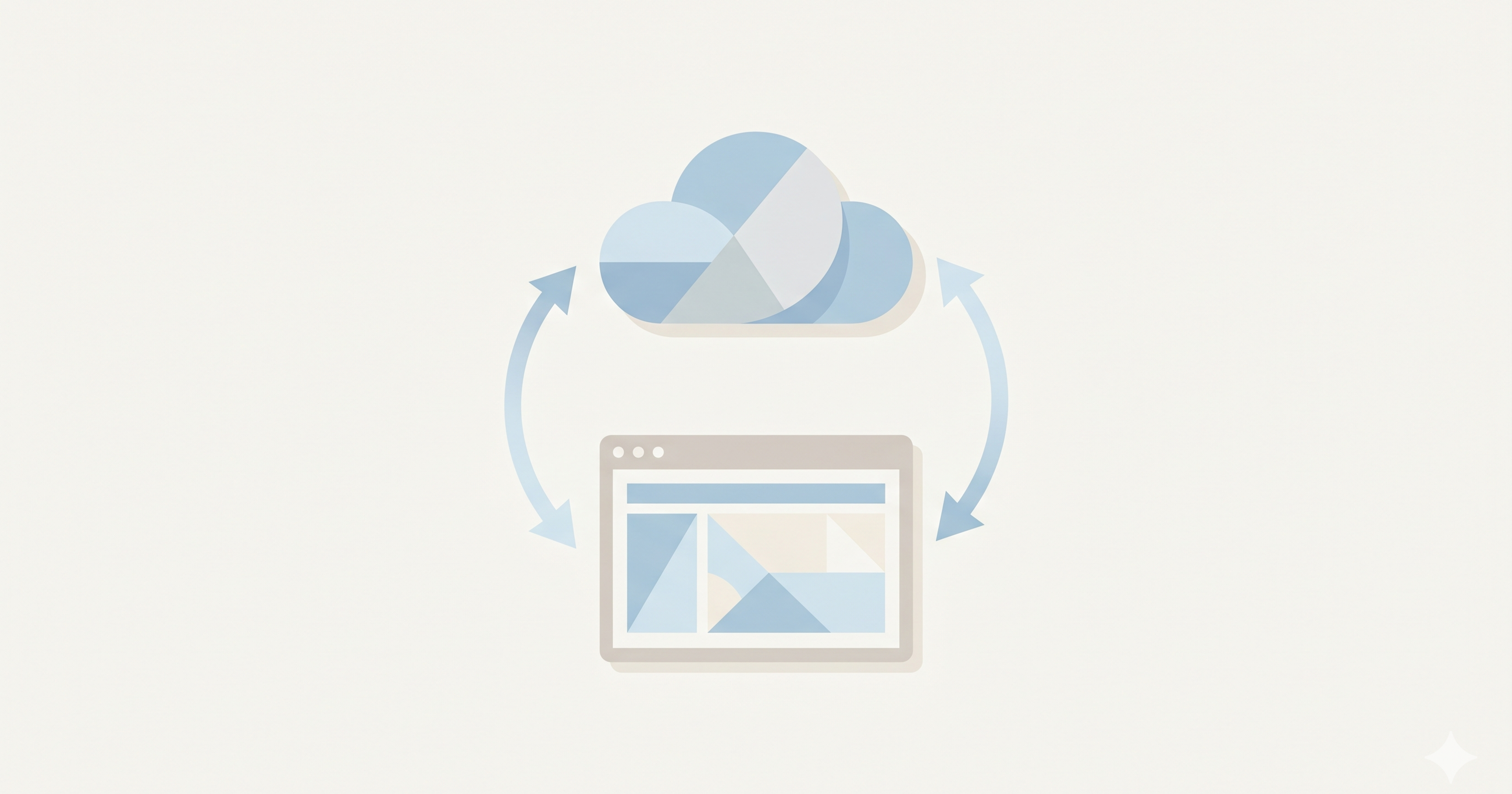
Software as a Service is a software delivery model where:
- The software runs on the provider's servers (cloud).
- Customers access it via a browser or app over the internet.
- Customers pay a recurring subscription (monthly or annual).
- The provider handles updates, maintenance, and infrastructure.
- No install, no version management, no "upgrade CDs" for customers.
Contrast with traditional ("perpetual license") software:
- You pay once for a copy.
- You install it on your computer.
- You handle updates.
- Version conflicts over time.
By 2026, SaaS has largely replaced perpetual licensing for most business software.
#10 everyday SaaS examples
- Gmail — email SaaS.
- Slack — team messaging SaaS.
- Notion — docs + wiki SaaS.
- Figma — design collaboration SaaS.
- Stripe — payments SaaS.
- HubSpot — marketing + sales SaaS.
- Zoom — video conferencing SaaS.
- Shopify — e-commerce SaaS.
- ChatGPT / Claude — AI assistant SaaS.
- BetterLaunch — product launch platform SaaS.
If you pay monthly or annually to use software online, you're using SaaS.
#How the SaaS business model works
#Revenue
- Monthly or annual subscriptions.
- Tiered pricing common (Free / Pro / Business / Enterprise).
- Usage-based pricing common for API-first SaaS.
- Hybrid models mix subscription + usage.
#Costs
- Cloud infrastructure (AWS, Google Cloud, Cloudflare).
- Engineering salaries.
- Customer support.
- Marketing and sales.
#Key metrics
- MRR (Monthly Recurring Revenue).
- Churn rate (% customers lost per month).
- LTV (Lifetime Value).
- CAC (Customer Acquisition Cost).
- NRR (Net Revenue Retention).
#Economics
- Gross margin: 70-90% typical. Software doesn't consume per-unit resources like physical products.
- Operating leverage: first 100 customers cost the same to serve as the first 10,000 in many cases.
- Compounding revenue: a customer added in year 1 still pays in year 5 (if they stay).
- Valuation multiple: public SaaS trades at 5-15x ARR typically.
#Why SaaS dominated software (2010s to 2020s)
- Cloud infrastructure matured. AWS (2006), Google Cloud (2008), Azure (2010) made hosting cheap and reliable.
- Browsers got good. Enough capability to run complex apps natively.
- Recurring revenue appealed to investors. Predictable, compounding, valuable.
- Customers preferred "always up to date." No manual upgrades.
- Mobile/remote work. Required accessible-from-anywhere software.
By 2020, SaaS was the dominant model. By 2026, even legacy perpetual software (Adobe, Microsoft Office) had fully transitioned to SaaS pricing.
#The different flavors of SaaS
#B2B SaaS (business-to-business)
Sells to other companies. Examples: Salesforce, HubSpot, Stripe, Slack. Typical contract: $20-$20,000/month per customer. Sales cycle: days to 12+ months.
#B2C SaaS (business-to-consumer)
Sells to individual consumers. Examples: Netflix (streaming SaaS), Grammarly, Duolingo Premium. Typical subscription: $5-$30/month. Churn: higher than B2B.
#Prosumer SaaS
Sits between B2B and B2C. Sells to professionals, creators, freelancers. Examples: Notion, Figma individual, Adobe Creative Cloud. Typical subscription: $10-$50/month.
#Enterprise SaaS
Large contracts, custom pricing, dedicated support. Examples: Workday, Salesforce Enterprise, ServiceNow. Typical contract: $50K-$10M+ per year.
#Micro-SaaS
Narrow-focus SaaS built by solo founders or small teams. Typical revenue: $1K-$50K MRR.
#Vertical SaaS
SaaS for specific industries. Examples: Veeva (pharma), Toast (restaurants), Procore (construction).
#Horizontal SaaS
SaaS usable across industries. Examples: Zoom, Slack, Notion.
#Pros and cons of SaaS
#For users
Pros:
- Always up to date.
- Accessible from any device.
- No install friction.
- Predictable cost.
- Easy to try before buying.
Cons:
- Ongoing cost vs one-time.
- Data lives on vendor servers (privacy).
- Dependent on internet.
- Vendor can change pricing or shut down.
#For builders
Pros:
- Recurring revenue.
- High gross margins.
- Scales with minimal marginal cost.
- Valuable exits (5-15x ARR multiples).
Cons:
- Requires ongoing development and support.
- Churn is a constant battle.
- Infrastructure complexity.
- Competitive market.
#SaaS in 2026 (current trends)
1. AI-native SaaS. Every new SaaS has AI features or is AI-first.
2. Usage-based pricing growing. Especially for AI products (per-token, per-call).
3. Vertical SaaS still an open frontier. Many industries remain underserved.
4. Indie SaaS boom. AI + no-code lets solopreneurs build profitable SaaS without teams.
5. Bundling and platform plays. Existing SaaS adding adjacent products to raise ACV.
6. API-first SaaS. Products that expose APIs become infrastructure for other SaaS.
7. Agentic SaaS. Products where AI agents take autonomous actions for users.
#Is SaaS right for you (as a founder)?
Good fit:
- You can build software (or hire someone to).
- You've identified a narrow niche with a real problem.
- You're willing to commit 1-3+ years.
- You want recurring revenue and moderate scale.
Bad fit:
- You want fast exit (< 2 years).
- You prefer one-time transactions.
- You don't enjoy solving the same problem repeatedly.
- You can't commit to multi-year effort.
Most indie founders who build SaaS plan for 3-7 year horizons. The compounding math favors patience.
#How much does it cost to build a SaaS?
Indie scale (solo founder, 2026):
- Development: $0-$10K (mostly your time).
- Tooling: $100-$500/month ongoing.
- Marketing: $0-$2K at launch.
- Total cash: $500-$15K to launch.
Funded scale:
- Seed: $500K-$2M.
- Series A: $5M-$20M.
- Used for engineering + sales + marketing hires.
#FAQ
What does SaaS stand for?
Software as a Service. Software accessed online via subscription instead of bought as a perpetual license.
Is Gmail SaaS?
Yes. Gmail is one of the largest SaaS products (free + paid Workspace tiers).
Is Netflix SaaS?
Technically yes (Software/Streaming as a Service). Commonly called "streaming" rather than SaaS, but the model is identical.
What's the difference between SaaS and cloud computing?
SaaS is one form of cloud computing. Cloud also includes IaaS (Infrastructure, like AWS EC2) and PaaS (Platform, like Heroku). SaaS is end-user apps; IaaS/PaaS are for developers.
How do I build a SaaS?
See SaaS Ideas, Bootstrap Startup 2026, Product Launch Strategy 2026. Pick a niche, validate, ship MVP, distribute, iterate.
What's the best SaaS business to start?
Depends on skills and niche. See SaaS Ideas in 2026: 50 Niches Worth Building.
Is SaaS dying?
No. SaaS continues to grow, with AI accelerating new-category creation. Specific sub-categories face saturation; the overall model thrives.
Can one person run a SaaS?
Yes. Many successful indie SaaS are solo operations at $10K-$100K MRR. See Solopreneur in 2026 and Indie Hacker in 2026.
What are the biggest SaaS companies?
Salesforce, Microsoft (365), Adobe, ServiceNow, Workday, SAP, Oracle NetSuite. See Best SaaS Companies in 2026: 50 Winners.
How much can a SaaS founder make?
Wide range. Indie SaaS: $0 to $100K+ MRR solo. Funded SaaS: $1M to $1B+ ARR with teams. Median active indie SaaS founder: $1K-$5K MRR.
#Summary
SaaS is software sold as an ongoing service, hosted in the cloud, paid monthly or annually. It dominates modern software delivery. Building a SaaS is accessible in 2026 thanks to AI, no-code, and cheap infrastructure. Running a successful SaaS requires 1-3+ years of commitment and discipline.
If you're ready to launch your SaaS, list on BetterLaunch for an editorial listing and a backlink.
List your SaaS on BetterLaunch →