Most "SaaS onboarding best practices" articles list 10 tactics you already know: use tooltips, offer a tour, send a welcome email. The articles rank because SEO; the tactics do not work because they are generic.
This is the indie founder's playbook. We run BetterLaunch.co, a launch platform for indie founders. The onboarding changes that actually move activation rate are usually not the ones Appcues is selling. Here is what we see work.
#TL;DR
- Activation rate is the single most important SaaS metric at indie stage. A 20% to 40% jump is achievable in 2 weeks of focused work.
- The 5 changes that deliver 80% of activation gains: shorter signup, time-to-aha under 10 minutes, pre-populated demo data, a visible next step, and a scheduled email that fires if activation stalls.
- The "one-time tutorial" is overrated. The best onboarding is continuous: it teaches when users are stuck, not when they arrive.
- Tooltips, tours, and walkthroughs do not fix bad onboarding; they paper over it.
- Benchmarks: under 20% activation = product problem. 30 to 40% = healthy. 50%+ = excellent.
- BetterLaunch — list your SaaS for traffic to your onboarding flow.
#What is SaaS onboarding?
SaaS onboarding is the set of experiences a new user goes through from signup to their "aha" moment, where they first experience the core value of your product. Done well, it converts signups to active users; done poorly, users bounce silently.
Two common misconceptions:
- Onboarding is not the tour. A product tour is one component. The onboarding system is everything from signup form to first success.
- Onboarding is not a one-time event. It continues for days or weeks until the user forms a habit.
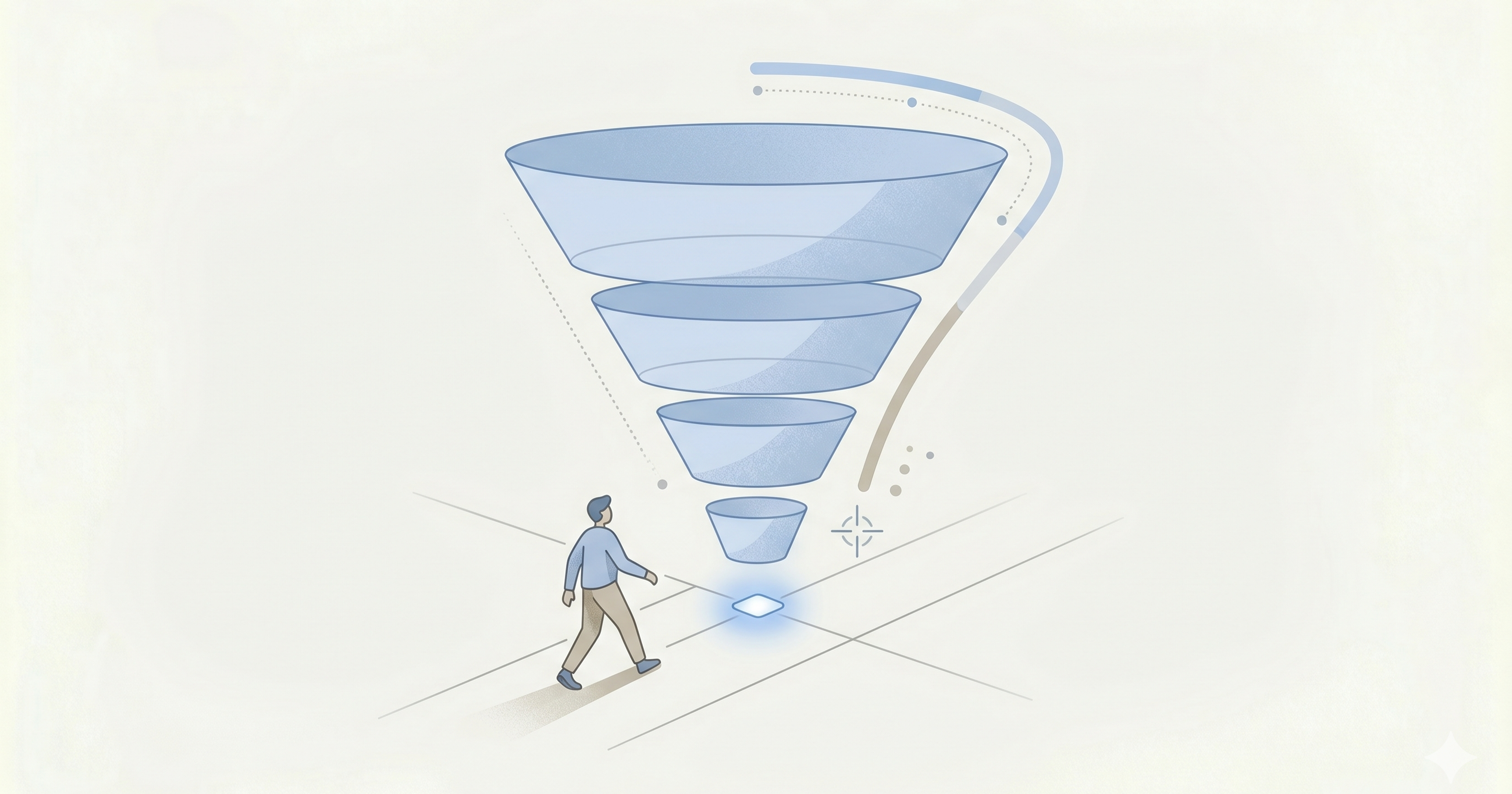
The right mental model: onboarding is a funnel from signup → first use → first success → second success → habit. Each step has a drop-off rate. Your job is to shrink each drop-off.
#The single metric that matters: activation rate
Activation rate = percentage of new signups who reach your defined "aha" moment within a defined window (usually 24 hours to 7 days).
Examples of good "aha" definitions:
- Slack: team sends 2,000 messages (not a single user metric, but team-based).
- Dropbox: files synced across devices.
- Notion: user creates first workspace and invites 1 teammate.
- Your SaaS: define the single moment where a new user clearly experiences the core value.
Benchmarks for indie SaaS:
- Below 20%: product or onboarding is broken.
- 20 to 30%: shippable, big room to improve.
- 30 to 40%: healthy.
- 40 to 50%: strong.
- 50%+: exceptional.
If activation is below 30%, doing more marketing is a waste. Fix onboarding first.
#The 5 changes that deliver 80% of activation gains
#Change 1: Shorten the signup form
Every extra field loses 3 to 10% of signups. The optimal form for most indie SaaS is: email + password + "sign up with Google / GitHub".
Fields to cut (they are usually asking for convenience, not necessity):
- Company name (ask later).
- Team size (ask later).
- Role (ask later).
- Phone number (never, unless SMS is the product).
- Referral source (can be asked in an email 24h later).
Data from observing hundreds of indie SaaS signup forms: cutting from 6 fields to 3 lifted signup conversion 30 to 60% consistently.
#Change 2: Time-to-aha under 10 minutes
Measure it. Open a clean browser profile, sign up from scratch, time how long from signup to first "aha" moment.
If it takes more than 10 minutes for an engaged user, it takes infinity for 70% of your real signups.
Ways to compress:
- Pre-populate demo data. Let new users play with a sample project, dashboard, or workspace immediately. They can modify or start from scratch after they see the value.
- Skip initial setup screens. Default settings are fine. You can ask to customize later.
- Show the valuable thing first, explain later. Users don't want a tour before they've seen the product.
- Make the first action obvious. One big CTA per screen.
#Change 3: The "next step" pattern
On every screen of onboarding, one thing should be obviously more important than everything else. The next step, clearly labeled, impossible to miss.
Patterns that work:
- A persistent progress bar at the top ("Step 2 of 4").
- A checklist widget in the top-right ("Complete these 4 steps to finish setup").
- A "continue" button that is always visible, disabled until the current action is complete.
Patterns that fail:
- "Dashboard empty state" with no clear action.
- Six feature cards all with equal CTA weight.
- A tour that ends with the user staring at an empty screen.
#Change 4: Pre-populated demo data
The single biggest activation win we see. For products with a content surface (projects, dashboards, workspaces, docs), letting new users start with a realistic demo of the product is usually better than starting them empty.
Examples of this done well:
- Figma's templates (new users start with a working template).
- Linear's "try a demo team" (pre-populated with issues and cycles).
- Notion's templates (pre-built workspaces).
Examples of this done poorly:
- Empty workspace, empty canvas, empty everything.
- A modal that says "import your data to get started" (friction wall).
Product teams often resist demo data because it feels "not real." Users love it because it is immediately useful.
#Change 5: The stalled-activation email
Track when a user has signed up but hasn't reached the aha moment within a defined window (usually 24 hours).
Send an email that:
- Names the specific next step they missed.
- Links directly to the action.
- Mentions one benefit of completing it.
Not a generic "here's how to use our product" email. A targeted nudge.
Example:
- Subject: "Finish your first project in 2 clicks"
- Body: "Hey Alex, you created an account yesterday but haven't started your first project yet. It takes 2 minutes. [Start your first project →]. Once it's set up, you'll see your [specific benefit]."
Activation rate typically rises 5 to 15 percentage points from a well-designed activation email alone.
#The 5 onboarding patterns most indie founders get wrong
#1. The one-time tour
A 5-step modal tour at first login that users dismiss 80% of the time. Instead: contextual tooltips that appear when users land on a new feature for the first time.
#2. Forcing email verification before access
Every extra step before "first use" drops 5 to 15% of signups. Allow full product access immediately; verify email in parallel, not as a gate.
#3. Long onboarding checklists (8+ items)
Users complete 2 to 3 and give up. Instead: 3 to 5 items, visible, completable in 10 minutes.
#4. Credit card required for free trial
Dropping CC-required in favor of no-CC-required trials typically doubles trial signups. Paid conversion from the larger base usually exceeds the previous funnel.
#5. Sending 6 welcome emails in the first 24 hours
Email fatigue is a retention killer. One welcome email at signup, one activation nudge at 24 hours if needed, one value-add email at 3 to 5 days. That is the minimum viable sequence.
#SaaS onboarding examples worth studying
#Linear
- Workspace created immediately on signup.
- Invited to team sample board with pre-populated issues.
- Keyboard shortcuts surfaced inline, not in a modal.
- First issue creation is the first "aha" moment, typically within 3 minutes.
#Notion
- Choose a persona at signup (writer, team, student, etc.) for personalized templates.
- Drops user into a pre-populated workspace they can immediately modify.
- AI-assist prompts appear contextually.
#Figma
- User starts in a free-drawing canvas immediately.
- Tutorials are optional side-panel, not forced modals.
- Template library is one click away, pre-populated projects for major use cases.
#Superhuman
- Famous for mandatory 30-minute onboarding call with a real human.
- Unusual for most SaaS, but works because price justifies it ($25+/month) and the product is genuinely complex.
- Activation rate reported to be among the highest in SaaS (80%+).
#Stripe
- Developer-first. API key visible within 60 seconds.
- Test mode with realistic sample data enabled by default.
- Docs-first onboarding respects developer workflow.
#The onboarding audit checklist
Run your own product through this audit once a quarter.
- Count signup form fields. More than 3? Cut.
- Time yourself from signup to aha. Over 10 minutes? Fix.
- Open a fresh browser profile. Sign up. What's the first thing you see? If empty, add demo data or a clear first action.
- Where is the next step on screen 1? Can a new user find it in 2 seconds?
- What happens if I sign up and don't act for 24 hours? Check if an email fires. Is it specific to my state?
- How many tooltips / modals / tours do I see in the first 5 minutes? Over 3? Too many.
- Can I complete the core action without reading anything? If not, the UX is too complex.
- What is my activation rate right now? If you don't know, you are guessing.
- Of users who activated, how many come back on day 2, day 7, day 30? Retention curves reveal if your aha moment is the real one.
- Have you watched 5 real users go through onboarding in the last 30 days? If not, do this before changing anything else.
#How to instrument activation (product analytics)
You cannot improve what you cannot measure. Minimum viable activation instrumentation:
- Track signup event. User ID, timestamp, source (organic, paid, referral).
- Track aha event. The one specific event that indicates value delivered.
- Calculate daily cohort: "Of users who signed up on day X, what % hit aha within 7 days?"
- Segment by signup source. Organic searches may convert differently than paid traffic.
Tools:
- PostHog (free tier generous).
- Amplitude (free tier generous).
- Mixpanel (free tier limited but fine for low-volume).
- A combination of Stripe + Google Sheets at under 100 signups/day.
Watch 5 session replays per week. Session replays are the single highest-ROI product analytics signal for indie SaaS.
#Common questions
How long should SaaS onboarding be?
The experience spans days or weeks; the active onboarding actions should total under 10 minutes of user effort to reach "aha."
What's a good activation rate for indie SaaS?
30 to 40% is healthy. 50%+ is exceptional. Below 20% is a signal to fix the product or onboarding before spending on marketing.
Should I use Appcues, Pendo, or Userflow for onboarding?
Not until you have 500+ signups per month and can justify the $100 to $500/month cost. Until then, build onboarding natively; iterate weekly.
How often should I iterate onboarding?
Weekly changes in the first 90 days post-launch. Monthly once activation is above 30%.
Is an interactive tutorial worth building?
Often no. A well-designed first screen with clear next steps usually outperforms a tutorial. Build tutorials only after you have clear activation data showing where users get stuck.
Should I offer a guided setup call?
For products over $100 ACV, a 30-minute onboarding call (Superhuman style) can lift activation dramatically. For self-serve indie SaaS under $50/month, it does not scale.
What is product-led onboarding?
Onboarding where the product itself teaches the user, rather than tutorials, sales calls, or support. The majority of indie SaaS should be product-led.
Can I A/B test onboarding changes?
Yes at >2,000 signups/month. Below that, run sequential tests (change one thing for 2 weeks, compare to baseline).
#Summary
SaaS onboarding for indie founders is not about adding features; it is about removing friction.
Shorter signup form, faster aha moment, pre-populated demo data, clear next step, well-timed activation email. Do those five things well and activation rate typically jumps 10 to 25 percentage points within 30 days.
While you iterate on onboarding, drive traffic to test it. List your SaaS on BetterLaunch for an editorial listing that drives indie-founder traffic to your onboarding flow.
List your SaaS on BetterLaunch →