Most "best SaaS companies" lists are either Wikipedia-style company rankings by revenue (Salesforce, Microsoft, Adobe) or investor-focused stock picks. Useful if you are an IT buyer or a public-market investor. Nearly useless if you are a founder trying to learn what great SaaS looks like at different scales.
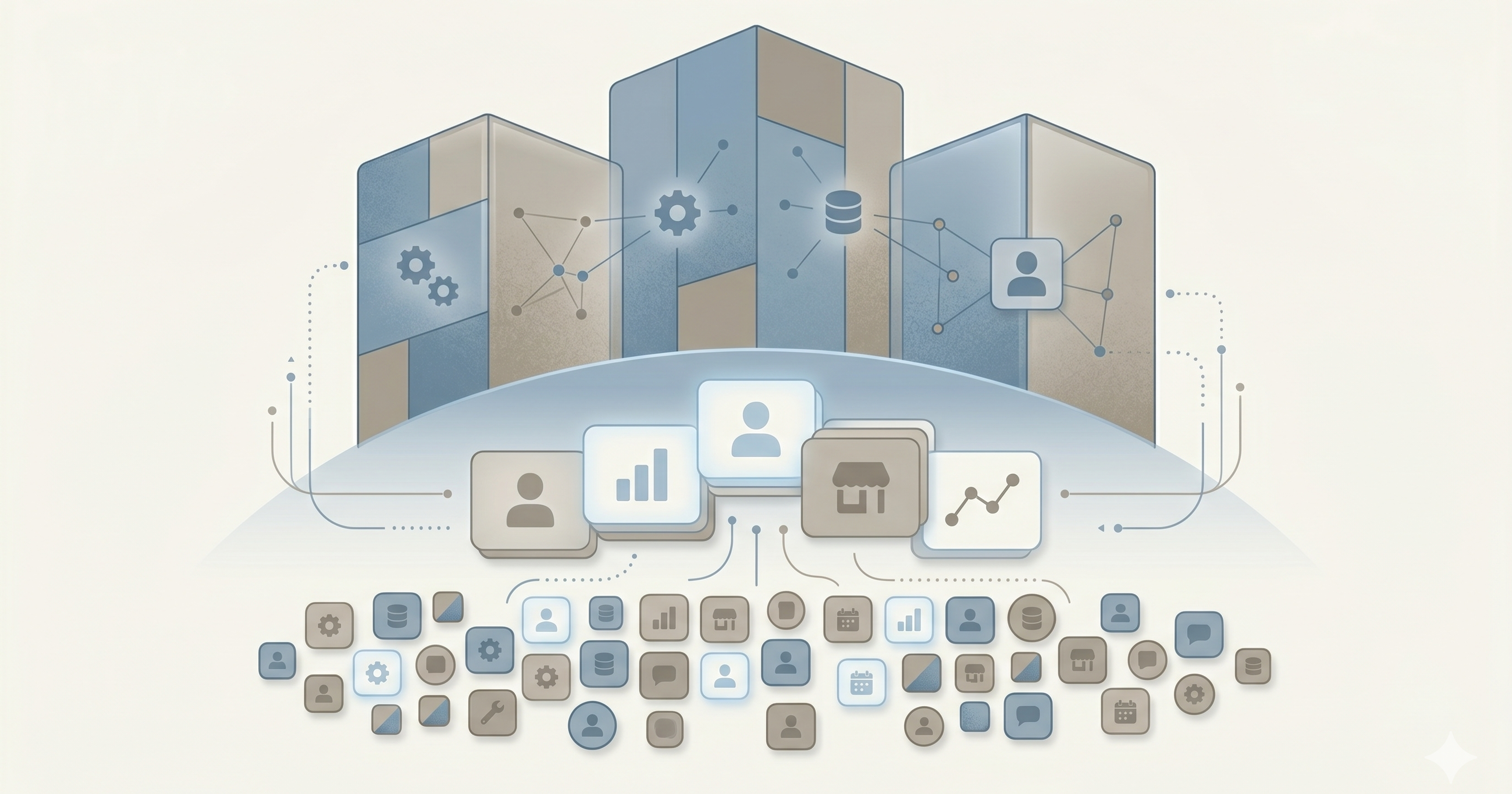
This list is different. 50 SaaS companies in 2026 to study, organized by scale: enterprise giants, breakout mid-market, and indie standouts. Each with a one-liner on why they matter, what you can learn, and how they went from zero to now.
We are BetterLaunch.co, a launch platform for indie founders. Here is the 2026 shortlist.
#TL;DR
- Great SaaS comes in three scales: enterprise (Salesforce, Adobe) win on distribution + incumbency, mid-market (Linear, Notion) win on product + brand, indie (Typefully, Superhuman pre-Grammarly) win on focus + founder story.
- Study different scales for different lessons. Enterprise teaches pricing strategy and retention. Mid-market teaches product design and community. Indie teaches positioning and execution.
- The best SaaS in 2026 are increasingly AI-augmented (Cursor, Linear's AI, Notion AI), unapologetically opinionated (Linear, Superhuman), and priced with nerve.
- [BetterLaunch](https://betterlaunch.co/submit) is where the next wave of indie standouts launch.
#Enterprise giants (learn: distribution, retention, pricing at scale)
- Salesforce — the original enterprise SaaS. Lesson: multi-cloud expansion within ICP.
- Microsoft 365 — bundling + distribution moat. Lesson: bundling economics.
- Adobe Creative Cloud — pricing power through creative vertical monopoly. Lesson: verticalization + brand.
- ServiceNow — workflow automation at IT scale. Lesson: adjacent expansion from one department.
- Workday — HR + finance enterprise SaaS. Lesson: slow deliberate ICP expansion.
- HubSpot — inbound marketing platform, now multi-hub. Lesson: content-led growth scale.
- Shopify — e-commerce platform. Lesson: platform + app ecosystem.
- Atlassian — developer tools (Jira, Confluence). Lesson: PLG to ent-scale.
- Zoom — video conferencing. Lesson: singular-focused excellence win.
- Slack (Salesforce-owned) — enterprise messaging. Lesson: viral-to-enterprise transition.
#High-growth mid-market (learn: product design, positioning, brand)
- Stripe — payment infrastructure. Lesson: developer-first distribution.
- Notion — docs + wiki. Lesson: community-led growth.
- Figma — design collaboration (now Adobe-owned). Lesson: browser-first architecture beats legacy.
- Linear — product management tool. Lesson: opinionated design + speed as branding.
- Vercel — frontend deployment. Lesson: developer ecosystem + open source.
- Airtable — structured data + collab. Lesson: spreadsheet-to-database bridge.
- Monday.com — work OS. Lesson: horizontal platform monetization.
- ClickUp — project management. Lesson: aggressive feature release + marketing.
- Ramp — corporate card + spend. Lesson: free product + financial upsell.
- Mercury — business banking for startups. Lesson: narrow ICP dominance.
- Webflow — no-code web builder. Lesson: designer-pro to enterprise.
- Framer — design + site builder. Lesson: tool that becomes the brand.
- Intercom — customer messaging + AI support. Lesson: product + pricing repositioning.
- Zendesk — customer support. Lesson: incumbent defense.
- Calendly — scheduling. Lesson: PLG + paid expansion.
- Loom (Atlassian-owned) — async video. Lesson: simple product + viral loops.
- Front — team inbox. Lesson: focused B2B SaaS without pivots.
- Retool — internal tool builder. Lesson: developer tool monetization.
- Supabase — open-source Firebase alternative. Lesson: OSS + commercial hybrid.
- Vercel (mentioned), Clerk — auth + user management. Lesson: API-first wedge.
#AI-era breakouts (learn: fast iteration, audience-led growth)
- Cursor — AI-powered IDE. Lesson: developer loyalty wins.
- Anthropic (Claude) — foundation model + API. Lesson: frontier as moat.
- Perplexity — AI search. Lesson: new category creation.
- Runway — generative video. Lesson: creator-first distribution.
- ElevenLabs — AI voice. Lesson: API-first B2B pricing.
- Lovable — AI app builder. Lesson: lowering the bar to build.
- v0 (Vercel) — UI generator. Lesson: incumbent extension.
- Midjourney — AI image generation. Lesson: community-first.
- Character.ai — consumer AI. Lesson: consumer-scale viral loops.
- Glean — enterprise AI search. Lesson: enterprise-first AI.
#Indie / micro-SaaS standouts (learn: focus, execution, lifestyle design)
- Typefully (@typefully) — X/Twitter composer. Built by Benjamin De Cock and Fabrizio Rinaldi. Narrow focus, strong brand.
- TypingMind (@tdinh_me) — ChatGPT UI alternative by Tony Dinh. Single founder, $1M+ ARR.
- TestimonialTo (@damengchen) — testimonial collection by Damon Chen. Bootstrapped, $100K+ MRR.
- Nomad List / Remote OK (@levelsio) — Pieter Levels' flagships. Public builders, years of profit.
- ShipFast / Marc Lou — Next.js boilerplate + multiple indie products.
- Fathom Analytics — privacy-first analytics. Bootstrapped, profitable.
- Plausible Analytics — EU privacy-first analytics. Open source.
- Feather — email marketing for creators. Small team, growing.
- Savvy Cal — meeting scheduler. Built by Derrick Reimer. Clean positioning.
- Tella — async video + recording. Small team, product-led growth.
#What the best SaaS companies in 2026 share
Across scale, some patterns repeat:
- Narrow positioning that the product lives up to. Linear is for product development. Stripe is for payments. Notion is for docs. Each one stays true to its core.
- Design that reinforces positioning. A "speed-first" product feels fast. A "craft" product feels crafted. Polish as strategy.
- Opinionated defaults. The best SaaS make choices for the user; they don't try to support every workflow.
- Founder-led voice. Even at enterprise scale (Stripe's Patrick Collison, Shopify's Tobi Lütke), founder writing and public presence shape brand.
- Community and content, not just ads. Content marketing, build-in-public, and community events are universal.
- Fair pricing relative to value. Underpricing is as common a mistake as overpricing. The best SaaS get this near-right.
#What to study and why
Study enterprise for: pricing models, expansion motion, retention mechanics, verticalization.
Study mid-market for: product design, positioning, brand building, PLG execution.
Study AI-era breakouts for: speed of iteration, new-category creation, developer-led growth.
Study indie standouts for: focus, niche dominance, bootstrapping economics, lifestyle design.
Most indie founders will draw most value from studying #41-50 (indie) and #11-30 (mid-market). The enterprise plays are too far from your reality to apply directly.
#How to actually learn from these companies
Five tactics:
- Read their public writings. Patrick Collison's blog, Linear's docs, Stripe's guides, Pieter Levels' tweets.
- Study their pricing pages. Screenshot, analyze, compare. (See Pricing Page Examples: 20 of the Best.)
- Track their hiring. Who they hire tells you where they are going. LinkedIn + Open Hiring Pages.
- Follow their teardowns. The SaaSGrid newsletter, #SaaSTwitter, Lenny's Newsletter, FirstRound Review.
- Use the products. Sign up for free trials of 5 you've never tried. Feel the UX, understand the flows.
#What these lists usually get wrong
- Revenue obsession. Large revenue is a lagging indicator; doesn't teach execution.
- Missing indie scale entirely. The $1M ARR indie SaaS is as instructive as the $1B public one, sometimes more so.
- Treating "best" as subjective opinion only. The best SaaS are identifiable by their focus, brand coherence, customer love, and revenue growth together.
- Including companies purely for scale. Being big isn't the same as being exemplary.
#FAQ
What are the biggest SaaS companies? Salesforce, Microsoft (Office 365 SaaS revenue), Adobe, ServiceNow, Workday, Oracle NetSuite lead by revenue. But "biggest" is not "best"; best includes teaching value, product quality, and positioning coherence.
What indie SaaS companies should I follow? The indie standouts in section 5 above: Typefully, TypingMind, TestimonialTo, Nomad List, ShipFast, Fathom, Plausible, Feather, SavvyCal, Tella. Plus public founders on X/Twitter: @levelsio, @tdinh_me, @damengchen, @marc_louvion, @marckohlbrugge.
Are AI SaaS companies overhyped? Some are. The breakouts (Cursor, Anthropic, Perplexity) show the category has real revenue. Many AI wrappers have not yet earned sustained revenue, as expected in a new category.
What makes a SaaS company successful? Narrow positioning, product that matches, sustained distribution effort, fair pricing, consistent founder voice, and time. Most successful SaaS are 7+ years in; the "overnight" stories almost never are.
Can indie SaaS beat enterprise SaaS? In a narrow niche, yes. Indie SaaS can dominate a specific 50K-user market with a focused product. Indie SaaS cannot win the Salesforce market.
How much do the best SaaS companies spend on marketing? Public SaaS typically spend 40 to 60% of revenue on sales + marketing in growth mode. Indie SaaS spend 10 to 30% on marketing (mostly on content, not ads).
What's the biggest lesson from studying these companies? Focus and time. They pick a narrow thing, do it relentlessly well, and compound for years. Nearly every other "tactic" is secondary.
#Summary
The best SaaS companies in 2026 span three scales: enterprise giants, mid-market breakouts, and indie standouts. Each teaches a different lesson. Study with intent; apply what fits your stage.
If you are building what might one day join this list, list your SaaS on BetterLaunch for an editorial listing and a backlink and indie-founder audience.
List your SaaS on BetterLaunch →