"Vibe coding" is the 2025-2026 term for AI-augmented coding where you write less code manually and describe more intent to AI assistants. Andrej Karpathy popularized the phrase in early 2025; by 2026 it describes how most indie founders actually ship software.
This guide covers what vibe coding actually means, the tools, workflows, limits, and how to use it to ship real products faster. We run BetterLaunch.co, a launch platform for indie founders built partly with vibe-coding workflows. Here's the honest picture.
#TL;DR
- Vibe coding: coding where you primarily describe intent to AI assistants and guide the output, rather than writing every line yourself.
- Andrej Karpathy coined the term in early 2025; by 2026 it's mainstream among indie developers.
- Tools: Cursor, Claude Code, Lovable, v0, Bolt, Replit Agent dominate different niches.
- Works best for: MVPs, standard CRUD apps, prototypes, established patterns, content sites.
- Works less well for: novel algorithms, performance-critical systems, complex architecture, subtle debugging.
- Speed gain: typical indie devs report 2-10x faster shipping for standard SaaS features.
- [BetterLaunch](https://betterlaunch.co/submit) is where vibe-coded SaaS products get their first traction.
#What is vibe coding?
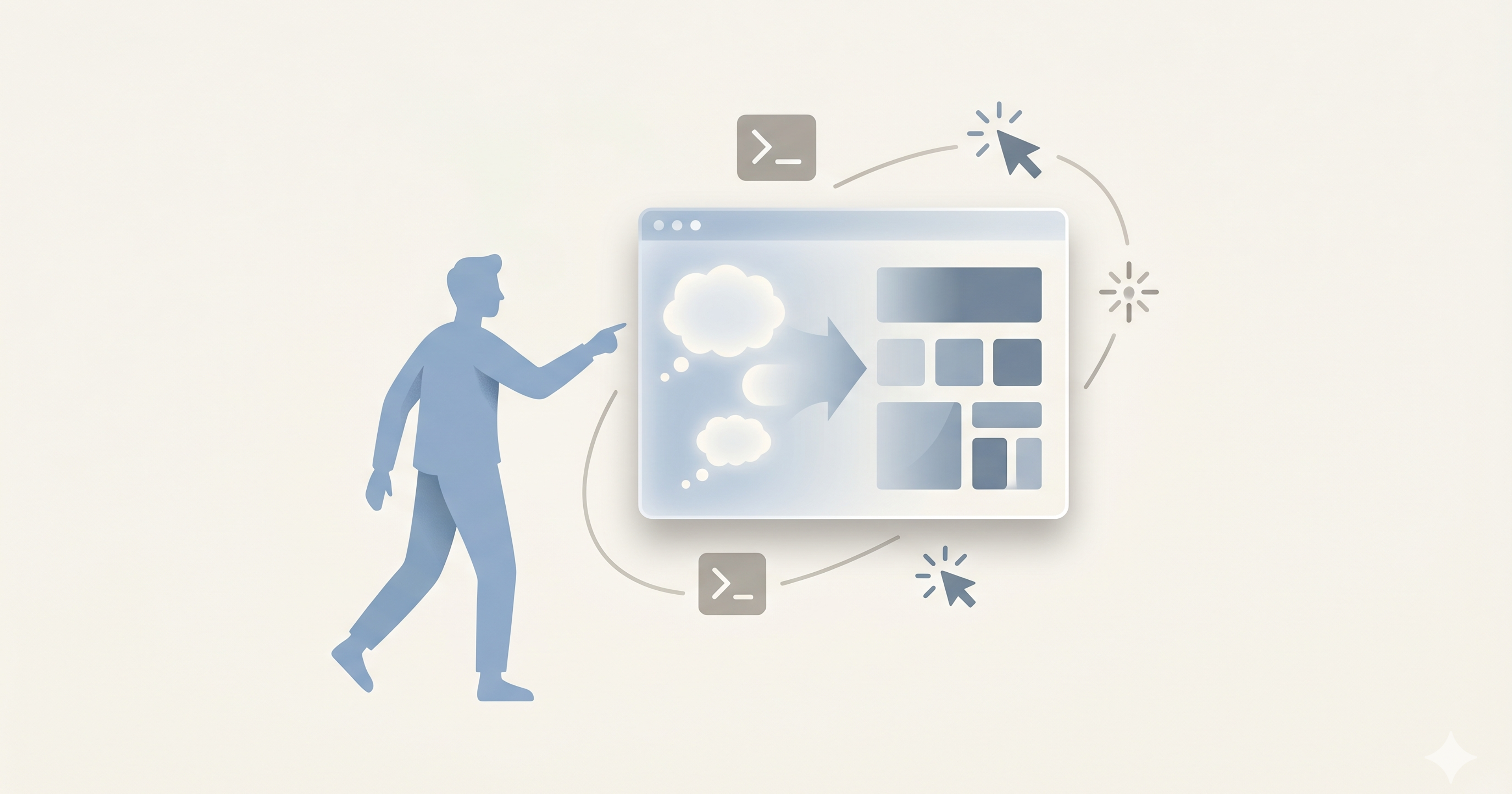
Vibe coding is a style of programming where the developer:
- Describes the desired outcome in natural language to an AI assistant.
- Reviews and guides the AI-generated code.
- Iterates quickly via conversation rather than manual typing.
- Focuses mental energy on intent, architecture, and judgment rather than syntax.
It's not "AI codes everything and you approve." It's "you're the architect; AI is the typist + junior engineer pair."
The term gained traction after Andrej Karpathy described his own workflow with Claude and Cursor in early 2025, calling it "giving in to the vibes" and letting AI drive more.
#How vibe coding differs from traditional coding
Traditional coding:
- Write every line yourself.
- Read documentation.
- Debug character by character.
- Navigate with your hands.
AI-assisted coding (pre-2023):
- Autocomplete via tools like GitHub Copilot.
- AI suggests; you accept or reject line-by-line.
Vibe coding (2025-2026):
- Describe intent ("add user authentication with Google sign-in").
- AI scaffolds entire features.
- You guide with corrections ("use NextAuth instead of custom OAuth").
- Focus shifts to review, direction, judgment.
#The 2026 vibe-coding tool stack
#Primary tools
Cursor: AI-first IDE. The 2026 default for most developers. $20/month.
Claude Code: Terminal-native agentic coding. Often used alongside Cursor. Included with Claude Max ($100-$200/month).
Lovable: AI web-app builder for non-developers. $25-$100/month.
v0 (Vercel): AI UI generator. $20/month.
Bolt (StackBlitz): Browser-based AI app builder. Free + $20/month.
Replit Agent: Full-stack AI builder in Replit. $25/month (Core tier).
#Complementary
Claude/ChatGPT in browser: for design, docs, research during build.
Cline: VSCode extension for agentic coding inside existing IDE.
Aider: Terminal pair programmer for CLI-first developers.
#The typical vibe-coding workflow
Step 1: Open Cursor or Claude Code with your project.
Step 2: Describe what you want in natural language. Examples:
- "Add a pricing page with 3 tiers using shadcn components."
- "Implement email verification via Resend."
- "Refactor the User model to add team relationships."
Step 3: Review the AI's output. Run it. See what breaks.
Step 4: Iterate. "The auth flow doesn't handle magic links. Add support for them, keeping the Google OAuth path."
Step 5: Intervene manually when judgment is required.
Step 6: Commit.
A typical feature that used to take 2 days of manual coding now takes 3-6 hours of vibe coding.
#What vibe coding does well in 2026
1. Scaffolding standard features. Auth, billing, dashboards, CRUD, email templates.
2. Refactoring at scale. Rename a variable across 100 files; convert JavaScript to TypeScript; restructure a module.
3. Boilerplate elimination. API routes, validation, error handling, logging.
4. Test writing. Generate unit tests for existing functions.
5. Third-party integrations. "Add Stripe subscription billing with webhook handlers."
6. UI prototyping. v0 and Lovable generate working UI from descriptions.
7. Content site scaffolding. Marketing sites, blog systems, documentation.
8. Data pipeline scripts. Scrapers, parsers, ETL basics.
#What vibe coding does poorly
1. Novel algorithms. AI will produce plausible-looking code with subtle bugs for truly new problems.
2. Performance-critical systems. Optimization requires domain knowledge AI often lacks.
3. Distributed systems debugging. Race conditions, eventual consistency: hard for AI.
4. Complex architectural decisions. Monolith vs microservices, database sharding: human judgment.
5. Subtle security vulnerabilities. AI often misses edge cases in auth, input validation.
6. Understanding ambiguous requirements. If the human isn't clear, AI produces confident wrong answers.
7. Organizational patterns. How a codebase should be structured long-term.
#The real productivity gain (honest numbers)
From our own tracking at BetterLaunch and community surveys:
- Simple CRUD features: 5-10x faster with vibe coding.
- Integration work (Stripe, email, etc.): 3-5x faster.
- Refactoring: 5-10x faster.
- New algorithmic code: 1-2x faster (still needs thinking).
- Debugging tricky bugs: often equal or slower (AI can be misleading).
Average across a typical indie SaaS codebase: 3-5x faster overall shipping.
#Common vibe-coding mistakes
- Trusting AI code blindly. Always review; test; lint; type-check.
- Skipping code review of your own output. The AI wrote it; you own it.
- Not learning the underlying patterns. If you never understand what AI generates, you can't debug when it breaks.
- Shipping complex code without tests. AI code can have subtle bugs; tests catch them.
- Over-prompting, under-reviewing. Spending 30 min writing the perfect prompt vs 10 min writing code + 10 min testing.
- Not versioning prompts. Save good prompts that work; they become reusable templates.
- Going fully autonomous too early. Human-in-loop is still the reliable pattern in 2026.
#Vibe coding for non-developers
Lovable, v0, Bolt, and Replit Agent have genuinely closed the gap for non-developers building web apps.
Realistic expectations:
- Non-developer can ship a landing page + simple SaaS MVP (auth, dashboard, one core feature) in 1-4 weeks.
- Beyond that, technical judgment becomes necessary. Non-devs often hit a ceiling at MVP complexity.
- Pair non-dev vibe coding with a friend-developer for when you hit the ceiling.
#When NOT to vibe code
- Code that touches money. Payment logic needs human review.
- Security-critical code. Auth, authorization, encryption.
- Code you need to deeply understand. Learning new concepts; vibe coding may skip the learning.
- Novel research. Cutting-edge algorithmic work.
- Code for interviews. Most technical interviews still value writing from scratch.
#FAQ
What is vibe coding? A coding style where you describe intent to AI assistants and guide their output, rather than writing every line manually. Coined by Andrej Karpathy in early 2025.
Who invented the term "vibe coding"? Andrej Karpathy popularized the phrase in early 2025 describing his Cursor + Claude workflow. The concept (AI-assisted coding) predates the term.
Is vibe coding the same as AI coding? Close but not identical. AI coding includes simple autocomplete. Vibe coding specifically describes the intent-driven, conversational style.
Do I need to know how to code to vibe code? Helpful but not required for simple apps. Lovable, v0, Bolt enable non-developers to ship. For complex software, coding knowledge still matters.
What are the best tools for vibe coding? Cursor + Claude Code for developers. Lovable + v0 for non-developers. Most power users use multiple tools for different tasks.
Is vibe coding safe for production? Yes with discipline: code review, tests, type-checking, linting. Dangerous without them.
How much faster is vibe coding? Typical indie reports: 3-5x faster overall; 5-10x for standard features. Slower for novel problems.
Will vibe coding replace developers? Not in 2026. It amplifies developers. Non-dev usage works for simple apps; complex systems still need engineering judgment.
#Summary
Vibe coding is the 2026 default for most indie SaaS development. Cursor + Claude Code for developers; Lovable + v0 for non-developers. 3-5x productivity gains are real when done with discipline.
When you ship what you vibe-code, list on BetterLaunch for an editorial listing and a backlink.
List your product on BetterLaunch →